

Calm in the Chaos: Vedanta Lessons for Your Working Day
Your office may be the last place you would expect to encounter spiritual wisdom. It might also be the most rewarding place to practise it. It's Monday morning. The deadline has moved forward, a valued client is unhappy, and two colleagues have stopped speaking to each other entirely. Somewhere beneath the noise, a quiet question…

What Vedanta Teaches Today's Leaders
Ancient wisdom isn't an escape from the pressures of leadership. It may be the best preparation for them. Picture a manager at the end of a long week. Targets missed. A colleague in tears. An inbox that refuses to empty, however late he stays at his desk. He has heard that Vedanta and the Bhagavad…

13 Mental Patterns That Quietly Distort Your Thinking
You'd like to believe you respond rationally to whatever happens to you. Someone hurts you, and you react. Something goes wrong, and you feel exactly what you feel. It seems fair. Even objective. But how do you actually know whether you're responding to what genuinely needs addressing, rather than to old prejudices dressed up as…

Insecurity, Fear & Hurt
The Big Idea Insecurity, fear, and hurt are not the same thing, even though we tend to lump them together as “bad feelings” we'd rather not have. Insecurity is a conclusion we've drawn; it lives at the level of self-understanding. Fear is an emotional response; it lives in the mind, in manas. Hurt is stored…

It’s Not You They’re Rejecting. It’s Your Approach
On the surface, this is about approaching someone you are attracted to. Underneath, it is about something much bigger: how you remain whole in the face of rejection and how you improve at anything that requires you to put yourself out there. The Fear That Stops You Whether you are a man approaching a woman…

Bhaja Govindam, Chapter 2
॥ mūḍha jahīhi dhanāgamatṛṣṇāṃ kuru sadbuddhiṃ manasi vitṛṣṇām | yallabhase nijakarmopāttaṃ vittaṃ tena vinodaya cittam || 2|| Translation: O deluded one! Give up your craving for accumulating wealth. Free your mind of craving and fill it instead with thoughts of the truth. Whatever wealth you earn through honest effort, let that be enough to keep…

Bhaja Govindam, Chapter 1
The first verse of Bhaja Govindam ॥ bhaja govindaṃ bhaja govindaṃ bhaja govindaṃ govindaṃ bhaja mūḍha mate | samprāpte sannihite kāle na hi na hi rakṣati ḍukṛṅ karaṇe || 1|| Translation: Worship Govinda, worship Govinda, worship Govinda, Oh fool! Rules of grammar will not save you at the time of your death The One Thing…

Insecurity in the Eyes of Advaita Vedānta
The Root Cause: Ignorance of Your True Nature Vedānta takes this inquiry further, and its answer is striking: the root cause of insecurity is not birth, not fallible parents, not an unkind world. The root cause is ignorance, specifically, the mistaken belief that you are a jīvātmā, a small, limited, embodied self, rather than what…

Where Does Insecurity Begin
Where does insecurity start? Not in adolescence, not in a difficult marriage, not in a disappointing career. It starts the moment a baby leaves the womb. The First Separation Before birth, a baby lives inside total security, no want, no waiting, no world outside itself. Then birth happens, bringing the first shock: separation. A baby's…

Understanding Insecurity
Insecurity is such a familiar guest that you rarely stop to ask what it actually is. You simply live inside it, the way a fish lives inside water, unaware that there is anything else to breathe. Ask anyone why they feel insecure, and they will hand you a reason. “I lack charisma, so I am…
Bhaja Govindam: The Poem That Awakens
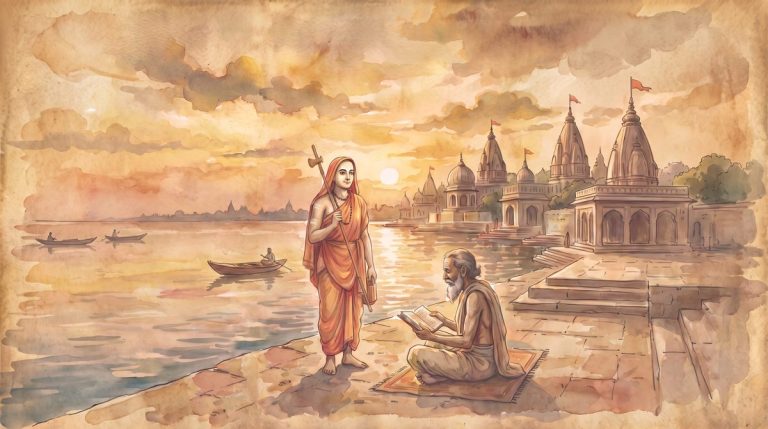
Introduction Bhaja Govindam is a devotional poem of 31 verses composed by Ādi Śaṅkarācārya. It emerged roughly 1,200 to 1,500 years ago, during a period marked by deep confusion over religious teaching in India. Numerous competing schools of philosophy existed at the time, and ordinary people struggled to understand what the scriptures actually taught. Interpretations…

Adi Śaṅkarācārya: A Journey Through Knowledge and Liberation
Introduction Adi Śaṅkarācārya stands as one of the most consequential teachers in history. Scholars generally place him in the early eighth century CE, with tradition commonly dating his life to 788–820 CE, though the exact dates remain a matter of scholarly debate. He gave systematic shape to Advaita Vedānta, the non-dualist teaching that the individual…

The Importance of Ishvara in Life
What is Ishvara? The world of forms and names that surrounds us is not a random collection of things. It is organized intelligently. Every form is intelligently put together, down to each assembly. What's more, each form is interconnected, having a meaningful relationship with everything else. Therefore, an all-knowledge, all-power organizes this world and governs…

Self-Esteem: The Inner Immune System
Sometimes, when you sit quietly with yourself, a verdict surfaces that you did not ask for: I am not good enough. It arrives uninvited, even when the evidence of your life argues against it, a supportive family, a loving partner, a good academic record, a career you have worked hard for. None of this seems…

Fear: What It Is, Where It Comes From, and How to Be Free of It
Fear, or bhaya in Sanskrit, is a universal human experience, touching our lives regardless of wealth, intelligence, or status. While it is a familiar emotion, few of us truly understand what fear is, where it comes from, or how it can be dissolved. Fear is an emotion we experience in both our waking and dream…

Guilt: What It Really Is and Why It Happens
Guilt is commonly understood as a temporary feeling that appears after wrongdoing. But in a deeper view, guilt is more than an emotion that comes and goes. It can become a persistent disturbance within a person, affecting peace of mind, self-acceptance, and the capacity to enjoy life. In this understanding, guilt is not merely the…

The Quiet Trap of Needing Things
Attachment and Why We Suffer When we say we are “attached” to someone or something, we do not mean physically connected. In Vedanta, attachment has a precise meaning: to look upon something or someone as essential for your well-being. In simpler terms, attachment is emotional dependence. Think of comfort food. There is nothing wrong with…

The Role You Forgot You Were Playing
Identification and the Freedom Beyond It Complete the sentence: “I am ___.” Whatever fills that blank is what you are identified with. It is how you see yourself. It is your self-definition. When someone dents your car in a parking lot, you feel upset. Why? Because it is “my car.” You, the car owner, have…

Why It's Never Really About You: Three Reasons People Act the Way They Do
A guide to breaking free from blame and finding lasting clarity We all begin in the same place. Something goes wrong, and we look outward. The world is at fault. Other people are at fault. Our parents, our neighbors, circumstances beyond our control. These become the explanations we reach for. It is the most natural…

Understanding the Teacher
By Swamini Chidekarasananda Saraswati A true teacher does not bind the student to themselves. A true teacher helps the student toward the vision of truth, toward living dharma, toward self-inquiry, and finally toward the student's own inner clarity. In the beginning, a student may naturally depend upon the teacher, and this dependence has its place….

The Ocean Does Not Fight Its Waves.
There is a teaching found in certain schools of Advaita Vedanta that says that in order to discover your true nature, you must remove all your mental impressions, all your likes and dislikes. Every single one of them. But it raises a very honest question. Is this really possible? Cleaning all your mental impressions, Vāsanās,…

What Is Hurt?
Part 1: Defining Hurt 1.1 The Opening Question Have you ever felt deeply hurt by a situation that left someone else completely unmoved? Same event. Two people. One walks away wounded; the other barely notices. Why? The difference between those two people does not lie in the event. It lies in how they thought about…

The Quiet Voice That Says
What self-esteem truly is, and how we come home to ourselves. Sometimes, when we sit with ourselves, we feel we are not good enough, despite having a supportive family, a loving partner, a good academic record. Many of us struggle with that familiar sentence: I am not enough. We drown ourselves in distraction, immerse ourselves…

The Hidden Harm of Gossip and How to Free Ourself From It
Gossip is not just a social bad habit. It is something that actively works against our own wellbeing and inner growth, and understanding why can change how we relate to others entirely. Why We Gossip When someone wrongs us or behaves badly, the mind's natural response, shaped by years of accumulated hurts, is to narrate…

How to Look at Your Mind: Ancient Wisdom for Modern Clarity
Introduction We are profoundly skilled at seeing the world, yet unskilled at understanding what we see. Our eyes function perfectly. Our minds register details with precision. And yet, we remain largely blind to the truth beneath the surface of our experience. Krishna in the Bhagavad Gita identifies this blindness not as a failure of the…

The Ancient Art of Turning Within: Meditation
By exploring the timeless wisdom of the ancient rishis, we discover that meditation is not merely a technique for relaxation — it is a profound journey of self-discovery that can transform every aspect of your life. What Meditation Really Is — And What It Is Not Before embarking on this inner journey, it is worth…

Introduction to Vedanta: The Ancient Path to Liberation
What Is Vedanta? The word Vedānta comes from Sanskrit, meaning the “final part” (anta) of the four Vedas — the ancient scriptures of India. While the earlier portions of the Vedas are largely dedicated to prayers and rituals, the concluding sections focus on profound spiritual wisdom discovered by ancient sages known as ṛṣis. These concluding texts are called the Upaniṣads, and…
Ahamkara: Understanding the True Nature of the Self-Concept
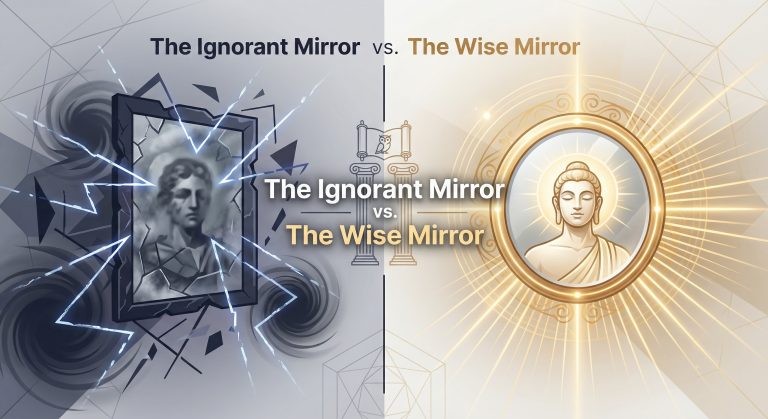
Introduction: The Emergence of Individual Identity In the Chandogya Upanishad, chapter 7, we find the profound declaration: “Sat eva saumya asit” – “Oneness alone was.” This ancient wisdom points to a fundamental truth about reality: in the beginning, there was one non-dual existence, one reality. This oneness, which we call Brahman, is pure awareness or…

How Personal Likes and Dislikes Distort Our Decisions
There is a simple yet profound metaphor to illustrate one of humanity's most persistent problems: how our personal likes and dislikes lead us astray in decision-making. The metaphor of over-fertilizing plants reveals something fundamental about the nature of human judgment and the path to wiser choices. The Plant Metaphor: When Love Becomes Harm Consider someone…

Jealousy: The Insecurity That Binds Us
Understanding the Root of Our Unease Jealousy is often misunderstood—confused with envy, trivialized as mere possessiveness, or dismissed as a weakness unworthy of serious examination. Yet it remains one of the most powerful emotions that govern human behavior, often quietly directing our choices, corroding our relationships, and limiting our potential. To truly understand jealousy, we…
Life Is Not Here to Make Me Happy: The Freedom From Disappointment
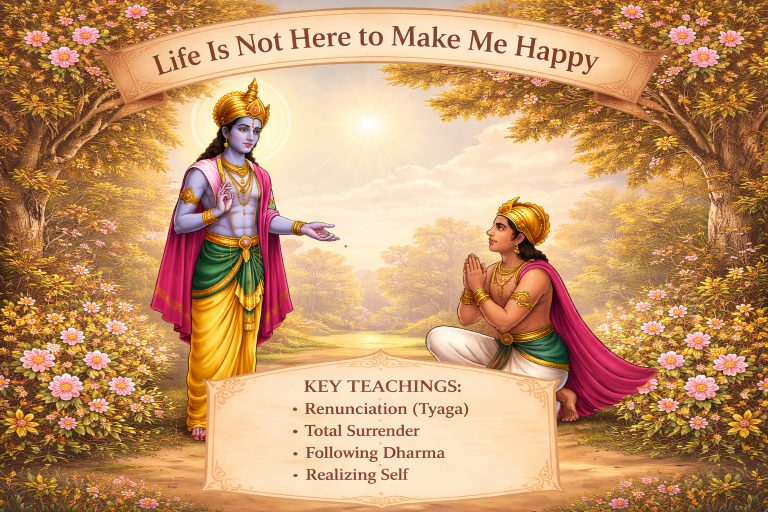
Introduction There's a profound first sentence: “Life isn't here to make you happy.” This isn't pessimism—it's the most liberating truth we can embrace. In a world where billions of people are constantly chasing happiness, yearning for life to bend to their will, this statement offers something far more valuable than fleeting pleasure: it offers freedom from disappointment. The…

Beyond the Trigger: The Truth About Anger and How to Manage It
The Origin of Anger Anger is rooted in pain stored in the unconscious mind during childhood. This pain stems from unfulfilled desires — moments when something we deeply wanted did not happen, leaving behind an emotional wound. Over time, as we grow, this stored pain begins to surface and express itself through anger, hatred, and…

How Karma Yoga Builds Healthy Self-Esteem
Understanding Self-Esteem: Beyond Surface-Level Confidence Self-esteem = Self-efficacy + Self-respect Many of us carry a persistent inner voice whispering “I am not good enough” — despite having supportive families, loving partners, and successful careers. This voice may be loud or subtle, but it persists, driving us to seek distraction through work, relationships, or achievements that…

Understanding the Waves That Are Not You
We tend to imagine the mind as a single, continuous field—a seamless stream of thinking, feeling, remembering, imagining. It appears unified, solid, and deeply personal. But Vedanta offers a far more precise and transformative view. What we call “the mind” is not a monolithic entity. It is a constant succession of momentary appearances. A thought…
Pain vs. Suffering: A Vedantic Perspective from the Ashtavakra Gita
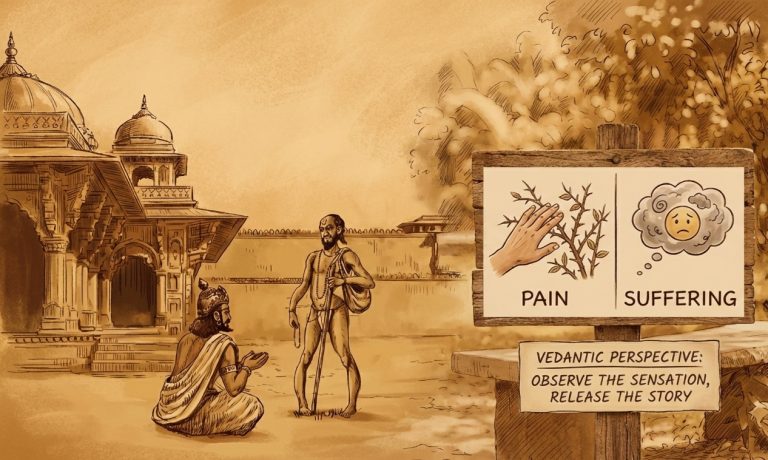
Human life inevitably includes pain. Physical injury, illness, loss, disappointment, and emotional upheaval are universal experiences. Yet, according to the wisdom of the Ashtavakra Gita, pain and suffering are not the same. Understanding this distinction is central to inner freedom. Pain Is a Sensation; Suffering Is a Response Pain refers to physical or emotional sensations….

Freedom from Suffering, Not Freedom from Illness
Understanding the Difference Between Suffering and Psychological Illness In spiritual circles, it is not uncommon to hear sweeping claims: enlightenment dissolves all suffering; meditation cures depression; realization ends anxiety. These statements are often well-intentioned, but they blur an essential distinction — the difference between existential suffering and psychological illness. A spiritual solution will not cure…

Spiritual and Psychological growth— an integrated path
Vedānta and modern psychotherapy are often pictured at opposite ends of a spectrum: Vedānta points to the timeless truth “you are Brahman,” while psychotherapy works in the here-and-now with habits, traumas and emotions. Read side-by-side, however, the two approaches are deeply complementary. Swami Tadatmananda, a senior disciple of Sri Swami Dayananda (one of the most…

Your True Nature Is Ātmā – Limitless, Actionless, Ever-Free Consciousness
Vedānta is the teaching of the reality of oneself – “my true nature.” The teaching takes the form of inquiry into the real meaning of the word “I.” That “I” is the Self that remains unchanged from childhood to youth to old age. We learn that this unchanging Self is free from all limitations and…