How Personal Likes and Dislikes Distort Our Decisions
There is a simple yet profound metaphor to illustrate one of humanity's most persistent problems: how our personal likes and dislikes lead us astray in decision-making. The metaphor of over-fertilizing plants reveals something fundamental about the nature of human judgment and the path to wiser choices.
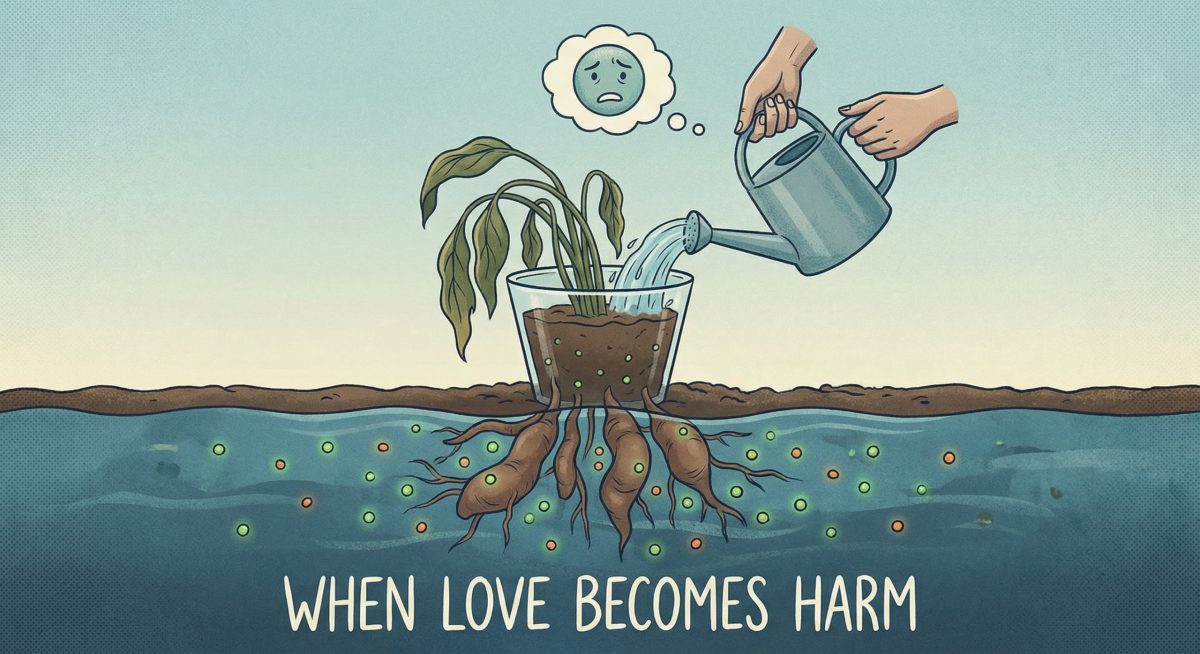
The Plant Metaphor: When Love Becomes Harm
Consider someone who has developed an affection for fertilizers. Every day, they wake up and see their plants' leaves looking slightly droopy. Driven by their discomfort with wilting leaves, they rush to water the plant or add more fertilizer. On the surface, this appears caring and responsible. Yet let’s look deeper: “Is that fair unto the plant?”
This seemingly benevolent action is actually driven by the person's agitation rather than the plant's actual needs. The decision to water or fertilize stems not from objective assessment but from the inability to tolerate personal discomfort with the sight of wilting leaves. The result? The plant suffers from overwatering and excessive fertilization, all in the name of care.
The Mechanism of Distorted Decision-Making
This metaphor illuminates a crucial principle: when we make decisions based on our likes and dislikes, we're responding to our internal agitation rather than the objective needs of the situation. Our choices become reactive rather than responsive, driven by what Krishna calls “fancies” rather than wisdom.
Consider how this plays out in daily life:
- In parenting: A parent whose child is accused of bullying might defensively deny it, not because they've objectively assessed the situation, but because accepting it threatens their self-image as a good parent.
- In leadership: A manager might avoid difficult conversations with underperforming employees because they dislike conflict, even when addressing the issue is necessary for team health.
- In relationships: We might avoid setting boundaries because we dislike disappointing others, even when clear boundaries would serve everyone better.
The Arjuna Dilemma: When Both Options Feel Wrong
The Bhagavad Gita presents Arjuna's dilemma as the ultimate example of decision-making paralysis caused by personal attachments. Faced with a war against his own family members, Arjuna finds himself trapped between two equally unpalatable options:
- Fight: This means acting against people he has loved and protected for decades
- Don't fight: This means allowing unjust leadership to continue, potentially harming society
Krishna's profound insight is that both choices are wrong when made from the paradigm of personal likes and dislikes. The question isn't whether to fight or not to fight—it's about the intention and criteria behind the decision.
The Paradigm Shift: From Personal Investment to Impact Thinking
Krishna advocates for a fundamental shift in decision-making criteria. Instead of asking “What do I want?” or “What makes me comfortable?”, the question becomes: “What does the larger whole need?”
This approach, which we can call “impact thinking,” involves:
- Assessing the broader consequences of our actions on family, community, organization, and society
- Setting aside personal emotional investments in favor of objective evaluation
- Considering the long-term effects on all stakeholders, not just immediate comfort
- Recognizing our limited control over outcomes while taking full responsibility for our choices
Real-World Examples of Impact Thinking
History offers powerful examples of leaders who overcame personal likes and dislikes to serve the greater good:
Nelson Mandela spent 27 years in prison and had every reason for revenge when he became South Africa's president. Yet he chose reconciliation over retribution because he understood that revenge would divide the country and harm its people.
Mahatma Gandhi halted his independence movement at its peak when violence erupted, despite of progress and momentum. He prioritized non-violence over personal investment in the cause because the means had become inconsistent with the ultimate goal.
These leaders demonstrate that mature decision-making requires the courage to act against our immediate preferences when a larger purpose is at stake.
The Hidden Benefits of Impact Thinking
When we shift from personal-preference-based decisions to impact-based choices, something remarkable happens: we evolve our thinking capacity. This approach forces us to:
- Think systemically about networks and connections
- Surrender the illusion of complete control over outcomes
- Develop emotional resilience by focusing on contribution rather than personal satisfaction
- Reduce internal conflict by aligning with reality rather than fighting it
The Practical Challenge: Implementing Impact Thinking
The transition from preference-based to impact-based decision-making isn't easy. It requires:
- Honest self-examination of our true motivations
- Developing tolerance for personal discomfort when doing what's right
- Expanding our time horizon to consider long-term consequences
- Seeking diverse perspectives to counteract our blind spots
- Regular reflection on whether our actions serve the larger good
Beyond Decision-Making: A Path to Wisdom
The practice of setting aside personal likes and dislikes in decision-making serves a deeper purpose than just making better choices. It becomes a path toward wisdom and self-knowledge. Each time we choose impact over preference, we:
- Reduce our subjective limitations and see situations more clearly
- Develop greater emotional maturity and intellectual discernment
- Align with the natural order rather than fighting against it
- Prepare our minds for deeper understanding and peace
The Ultimate Freedom
Krishna suggests that true freedom comes not from getting what we want, but from wanting what serves the whole. This isn't about suppressing desires or becoming passive. Rather, it's about evolving beyond the narrow confines of personal preference to embrace a broader perspective that naturally includes our own well-being as part of the larger good.
Conclusion: The Daily Practice
The plant metaphor reminds us that every day presents opportunities to practice this wisdom. Before making decisions—large or small—we can ask ourselves:
- Am I responding to the actual needs of the situation or to my personal comfort?
- What would serve the larger whole, even if it challenges my preferences?
- How can I act with both compassion and wisdom?
The path from preference-driven to impact-driven decisions isn't just about making better choices—it's about becoming the kind of person whose natural inclination is to serve the greater good. In doing so, we discover that what truly serves everyone ultimately serves us as well, but in ways far richer and more meaningful than our limited personal preferences could ever provide.
“Based on the teachings of Andre Vas”