
The Quiet Trap of Needing Things
Attachment and Why We Suffer
When we say we are “attached” to someone or something, we do not mean physically connected. In Vedanta, attachment has a precise meaning: to look upon something or someone as essential for your well-being. In simpler terms, attachment is emotional dependence.
Think of comfort food. There is nothing wrong with enjoying food that brings you pleasure. The problem arises when its absence makes you feel worse. Some people will get into a car in the middle of the night and drive five miles to a store just to get what they need. That is not enjoyment. That is emotional dependence. The food has been given a value it does not deserve.
“If comfort food makes you feel better, fine. But the absence of a comfort food should have a neutral effect on you.”
The Job That Owns You
Many people are deeply attached to their professions, not to the paycheck, but to the sense of identity, purpose, and status it provides. You can see this most clearly in conversations about retirement. A person says they have enough money and could retire at any time, and yet they do not. The question worth asking is: do you have the job, or does the job have you?
When the business is going well, you are on top of the world. When it is not, you sink into depression. This is attachment. Your well-being has been made contingent on something outside yourself, something unreliable, something that rises and falls on its own terms.
When Love and Attachment Get Mixed Up
Nowhere is this confusion more painful than with family. Of all the places attachment hides, it hides most cleverly inside love. And the reason it is so hard to see is that love and attachment often feel exactly the same from the inside. A parent who loves a child and a parent who is attached to a child can look identical, until something goes wrong.
A parent insists their love for a child is pure and selfless, and no doubt they believe it. They would give anything for the child's welfare. They lose sleep over the child's struggles. They celebrate every small success as if it were their own. All of this feels like love. But here is the question worth sitting with: is the parent happy because the child is happy, or is the parent happy because their own emotional need is being met?
If the children are doing well, the parents are happy. If the children are not doing well, the parents are sad and depressed. Be very clear about what this means. If your child is struggling and you become depressed, you are not depressed because you love them. You are depressed because their condition affects you emotionally. Your sense of well-being depends on them doing well. That is emotional dependence. That is attachment.
“True love asks nothing in return, not even that the beloved live the life you imagined for them.”
Now consider a more difficult situation. It is not just that a parent wants the child to do well. In many families the expectation runs much deeper. The child should choose the right profession, the right partner, the right community, the right way of life. And when the child does not, the parent does not just feel disappointed. They feel injured. They feel betrayed. Families have been torn apart by a child choosing a marriage partner the parents could not accept. That fracture is not caused by love. It is caused by attachment.
Ask yourself: if your love for your child were truly pure and selfless, and that person, even one who did not meet your requirements, made your son or daughter genuinely happy, would it make any difference to you? If the love were pure, the answer would be no. Their happiness would be your happiness. But in the real world, it does make a difference, a very large one, and that is the clearest sign that something other than love is at work.
The word mama in Hindi and Gujarati means love. But its Sanskrit root means myness, the condition of making something mine. This is the origin of the word. What we call love is often the feeling of possession, of having someone belong to us, of needing them to behave in ways that confirm our sense of self and security. That is not love. That is attachment wearing the mask of love.
This is not to say parents do not love their children. Of course they do. The point is that love and attachment become so intertwined that we can no longer tell them apart. Love gives freely. It supports, it cares, it is present. Attachment demands. It needs the child to turn out a certain way, to validate the parent's hopes, to fulfill expectations that were never the child's to carry. When those expectations go unmet, the attachment that was mistaken for love becomes a source of real harm, to the parent and to the child.
If you drop those expectations, you can love your children fully, care for them, support them, and still be free. And here is the thing worth noting: your children will be a great deal happier too. The heaviest burden a child can carry is the weight of a parent's unmet emotional needs.
The Body and Its Demands
We also become attached to our bodies. When we are ill, we tell ourselves: I will be okay when I recover. But for those with chronic illness, that recovery never fully comes. What then? If contentment is tied to the condition of your body, something you have only limited control over, you will spend your life waiting for a peace that never arrives.
And if we take this all the way to its honest conclusion, think about the end of life. Every body, no matter how well cared for, will eventually fail. If your sense of well-being has always depended on your body being in good condition, what happens then? This is not a morbid question. It is perhaps the most important question attachment asks us to face.
The Hardest Attachment of All: The Mind
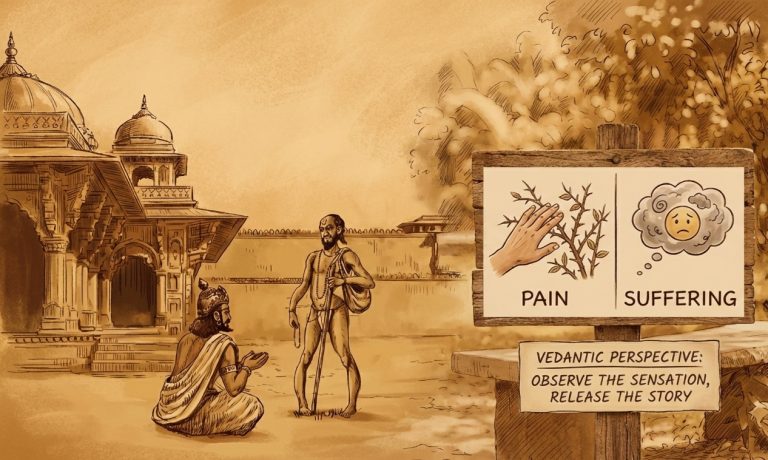
Of all the things we become attached to, the mind is the most intimate and the most overlooked. We are attached to our bodies, our jobs, our families, and we can at least point to those things. The mind is harder to see. Yet most of us carry a quiet, constant demand that our mind feel a certain way, calm, clear, undisturbed, at peace. And when it does not, we suffer twice: once from the difficult feeling itself, and again from the belief that we should not be feeling it.
When the mind is at ease, when it is content and rested, we feel okay. We ask no questions. But the moment grief arrives, or worry, or sadness, or anxiety, something in us resists. We want it gone. We think: I will be alright once this feeling passes. And so we add the burden of resistance on top of the burden of the feeling itself.
“An enlightened person's mind is the same as your mind, with one exception. There is no ignorance of the kind that causes suffering.”
But here is what these teachings point out: can you avoid grief when someone you love dies? Can you avoid anxiety when something genuinely threatening is happening in your life? Some degree of sadness, worry, and concern is not a sign of weakness or failure. It is simply how a human mind responds to a human life. To demand otherwise is to be attached to a mental state you cannot guarantee.
There is also a common misunderstanding about what inner freedom looks like. Many people imagine the ideal as someone so detached, so removed from the world, that nothing touches them. Someone who hears bad news and feels nothing. Someone who loses a loved one and remains unmoved. This is not the teaching, and it is not the goal. That kind of aloofness is not peace. It is numbness, and the two are very different things.
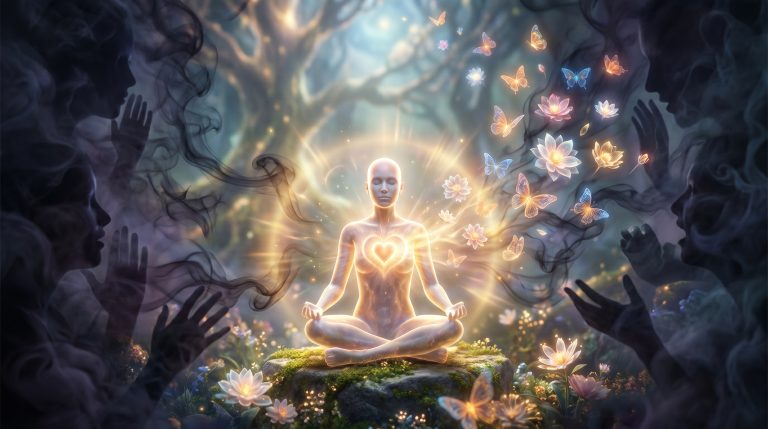
The mind of a wise person is not a mind emptied of feeling. It is a mind that is no longer in conflict with its own experience. Grief arises and is met without panic. Worry comes and is not made worse by the demand that it disappear immediately. The feeling moves through, as feelings do, without the additional layer of suffering that comes from fighting it.
The attachment to a pleasant mental state works exactly like every other attachment. When the condition is present, we are fine. When it is absent, we suffer. The solution is not to manufacture a permanently pleasant mind, which is impossible, but to stop making your sense of well-being dependent on the mind being in any particular state. That is the shift these teachings are pointing toward.
This is perhaps the deepest and most difficult application of the teaching on attachment. It asks something very subtle of us: not to stop feeling, but to stop needing to feel only certain things. To allow the mind to be what it is in any given moment, without the added suffering of demanding it be something else.
When you can do that, even partially, even occasionally, you will notice something. The difficult feelings do not last as long. They are not made heavier by resistance. And underneath them, there is something that was never disturbed at all.
The Solution
Think of ten boys running through the jungle for sixty or seventy years looking for a missing companion who was never lost. That is conventional life, a life spent seeking contentment through external things, getting fleeting moments of happiness, but never lasting peace.
The teaching is not to withdraw from the world or abandon your work, your family, your body. It is to stop looking to them for what they cannot give. Whatever you are dependent on is unreliable. Investments go up and down. Jobs come and go. Children become their own people. Bodies age and fail.
Contentment and peace cannot be contingent on any of these things. The solution is to turn attention inward, not outward to the job, the family, the body, but within, to the source of peace that is already there. That is what these teachings are pointing toward.
Based on the teachings of Swami Tadatmananda