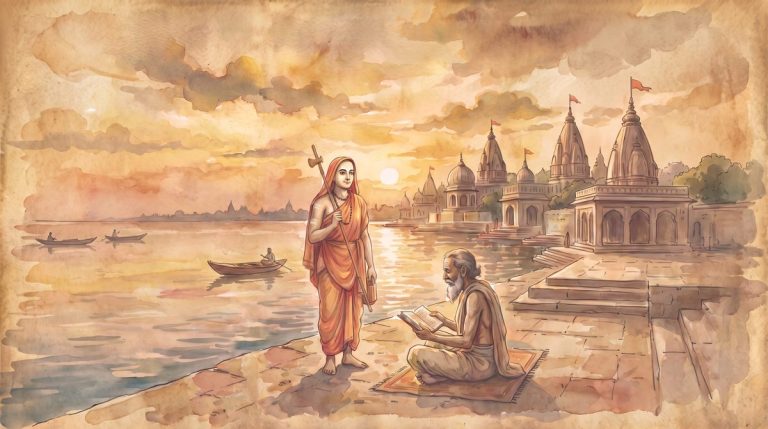

Understanding the Teacher
By Swamini Chidekarasananda Saraswati
A true teacher does not bind the student to themselves. A true teacher helps the student toward the vision of truth, toward living dharma, toward self-inquiry, and finally toward the student's own inner clarity.
In the beginning, a student may naturally depend upon the teacher, and this dependence has its place. Just as a child learning to walk holds the mother's hand, the student holds the teacher's words, presence, and guidance. But the mother does not want the child to hold her hand forever. Her joy is in seeing the child stand steadily. In the same way, the teacher's joy is not in possession, control, or emotional dependence, but in seeing the student become inwardly mature, thoughtful, prayerful, and free.
A teacher who needs to be needed is not yet free from insecurity. Such a teacher may gather students but may not necessarily make them free and independent.
The true teacher does not say, “You belong to me.” The true teacher says, “May you belong to truth. May you stand in dharma. May your mind become clear. May you discover that fullness which was never away from you.”
In the Vedantic tradition, the teacher is a means, not the destination. The guru is deeply revered because the guru removes ignorance, but the guru does not replace Ishvara, nor does the guru replace the student's own responsibility. The teacher points to the śāstra, the śāstra points to the Self, and the Self is all that is here.
A true teacher therefore gives freedom in this knowledge. Like a lamp lighting another lamp, the teacher wishes for the student to shine. Like a bird that teaches the young one to fly, the teacher knows that the nest has served its purpose when the wings are ready.
To let the student go is not indifference or dislike. It is the highest form of trust. It says: “I have given what I can. Now may Ishvara guide you. May the teaching protect you. May your own viveka become strong.”
This is real compassion. This is real teaching. Not control, but release. Not ownership, but blessing. Not emotional binding, but inner freedom.
A true teacher does not make disciples dependent on their personality. A true teacher helps the student discover the light by which both teacher and student are known.
OM TAT SAT
The Glory of Having the Right Teacher
Vedānta communicates knowledge through words. However, simply hearing Sanskrit terms, or even their English translations like “awareness” or “consciousness,” conveys little meaning on its own. These words remain abstract concepts until a qualified teacher carefully unfolds their meaning and demonstrates their living reality. Having a qualified Vedantic teacher (guru) is therefore essential on this journey.
The true teacher is one who has received the teachings from within the tradition and who, having fully assimilated that knowledge, abides in their true nature as whole and complete.
The Ideal Teacher-Student Relationship
I have been blessed on this journey by learning from remarkable teachers and guides. Each one embodied the ideal teacher-student relationship that allowed the teaching to truly translate in my life. It is through their grace and guidance that Vyakta exists today, and that this work of guiding others is possible at all.
May this article, serve each one of you. May it bring clarity in your choice of a guru and offer insight into how that sacred relationship is meant to unfold.