Bhaja Govindam: The Poem That Awakens
Introduction
Bhaja Govindam is a devotional poem of 31 verses composed by Ādi Śaṅkarācārya. It emerged roughly 1,200 to 1,500 years ago, during a period marked by deep confusion over religious teaching in India. Numerous competing schools of philosophy existed at the time, and ordinary people struggled to understand what the scriptures actually taught. Interpretations of rituals had become distorted, and many were troubled by practices such as animal sacrifice carried out in the name of religious duty. It was against this backdrop of genuine spiritual crisis and confusion that Bhaja Govindam came to be composed.
The Story Behind the Poem
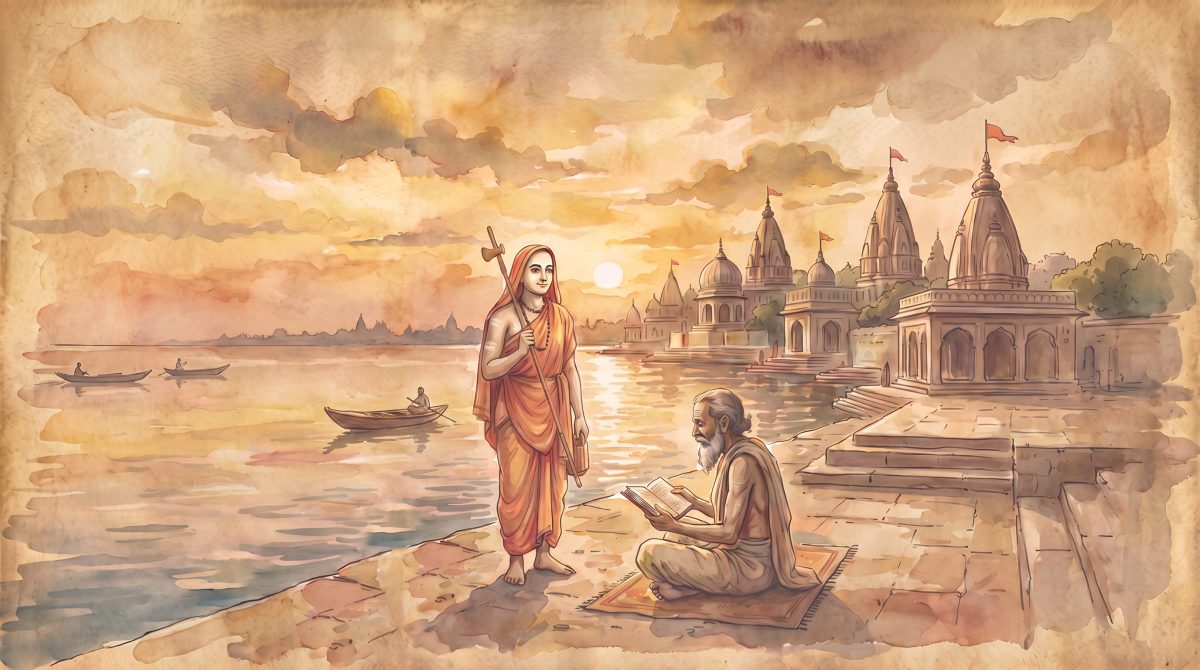
Bhaja Govindam has a specific origin story attached to it. While staying in Benares, Śaṅkarācārya is said to have come across an elderly pundit, a scholar nearing the end of his life, who was still reciting grammatical aphorisms from the work of the grammarian Pāṇini. Watching this old man cling to rote intellectual exercise even as death approached, Śaṅkarācārya was struck by a question: did this scholar understand how pointless this kind of accomplishment truly was?
He concluded that the man did not. In the poem's opening verse, he addresses this scholar as mūḍhah, a term the tradition takes care to explain is not quite “fool” in the everyday sense, but rather someone who is lost, or deluded, without realizing it.
The distinction matters. A person who knows they have lost their way will ask for guidance and correct their course. But someone lost without knowing it simply carries on as before, unaware anything is wrong. This kind of unrecognized delusion is compared to intoxication, a state in which a person doesn't know what they're doing and sometimes needs to be startled, even shaken firmly, back into awareness. The old scholar, convinced that what he was doing was right, exemplified exactly this condition. Seeing this, Śaṅkarācārya felt compelled to confront him, and through him, all of humanity, with the deeper realities of life. Across these 31 verses, he speaks to the ordinary person who has no idea they are chasing something ultimately without value.
This is the sense behind the word mūḍhamati, one whose very mind is “lost.” In this reading, Śaṅkarācārya's words function almost like a bracing slap, meant to jolt people out of unconsciousness and back into genuine awareness. There are truths about life, the poem suggests, that most of us remain asleep to, and the poem's stern sounding address, mūḍhamate (“O deluded one”), which opens the first verse, is meant not as an insult but as an awakening call.
Why It's Called Bhaja Govindam
The poem takes its name from the opening line of its first verse: “Bhaja govindaṁ bhaja govindam”, meaning “Worship Govinda, worship Govinda.” Its original title, however, was Moha Mudgara. In Sanskrit, mudgara means a mallet or hammer, and moha means delusion. The implication is deliberate: just as intoxication must sometimes be dealt with firmly and directly, so too must delusion. Through these verses, Śaṅkarācārya delivers what might be called forceful strokes of the mallet, blows aimed not at the person, but at the delusion itself, intended to rouse anyone lost in the business of ordinary life back into clarity and genuine spiritual consciousness.