Ahamkara: Understanding the True Nature of the Self-Concept
Introduction: The Emergence of Individual Identity
In the Chandogya Upanishad, chapter 7, we find the profound declaration: “Sat eva saumya asit” – “Oneness alone was.” This ancient wisdom points to a fundamental truth about reality: in the beginning, there was one non-dual existence, one reality. This oneness, which we call Brahman, is pure awareness or consciousness itself.
Yet here we are, experiencing ourselves as separate individuals with distinct personalities, memories, likes and dislikes. How does this apparent multiplicity arise from oneness? The answer lies in understanding the concept of Ahamkara – the ego or sense of “I” that emerges when consciousness manifests through what is known as the subtle body.
The Manifestation of Individual Existence
This reality of Brahman possesses a remarkable capacity to manifest forms – millions of forms, time, space, the periodic table of elements, the five elements, everything we experience. This capacity is called maya. Through this power, consciousness manifests what we call the subtle body – a conglomeration of thoughts, life experiences, beliefs, impressions, and personality traits.
This subtle body becomes conditioned by memories, past impressions, and everything it values or considers worthy of pursuit. It contains ideas about the world and how things work. All these conditioning factors are stored as thoughts and impressions in this subtle body, which you are carrying right now in this very moment.
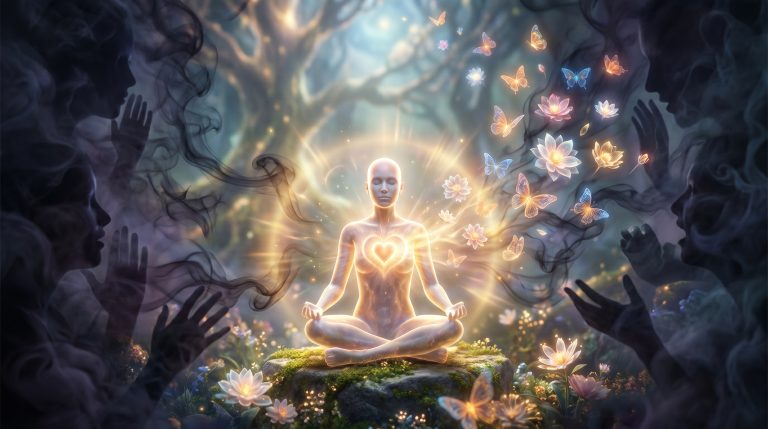
When consciousness pervades and penetrates this subtle body, something remarkable happens: a sense of “I” emerges. This is Ahamkara – the ego or individual self-concept that arises naturally when the one consciousness expresses itself through the medium of a particular subtle body.
The Mirror Analogy: Understanding Reflected Consciousness
To understand this process more clearly, imagine a sun – one brilliant sun made of hydrogen, shining continuously. This sun possesses the power to create out of itself five mirrors, made from its own substance. These mirrors have the capacity to reflect the light of the one sun, creating what we might call “reflected light.”
Now, is this reflected light different from the original sunlight? Not at all. Light consists of photons, whether it comes directly from the sun or is reflected from a mirror. The substance is identical – photons are photons. However, we do recognize that there is a phenomenon called reflected light, which exists only because of the medium of the mirror.
In this analogy, you are like one of these mirrors. Your subtle body is the mirror, and consciousness – which you know as your self-evident sense of “I” – is the light being reflected. Just as the mirror creates the appearance of separate reflected light while the light itself remains one, your subtle body creates the appearance of an individual “I” while consciousness itself remains undivided.
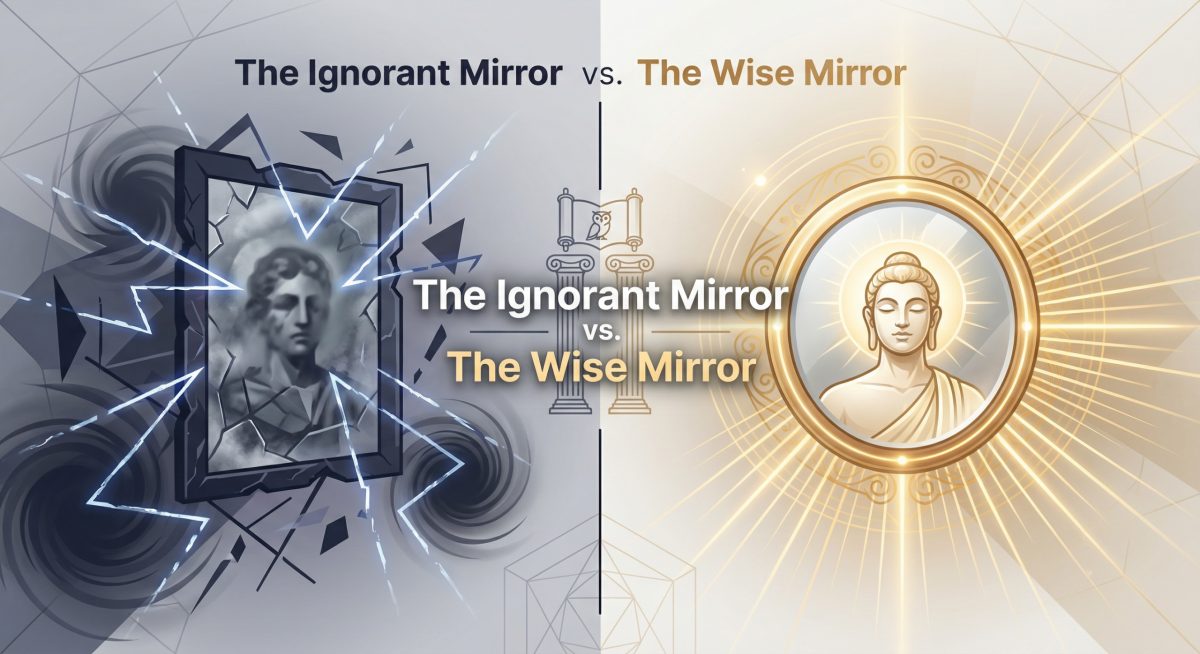
The Ignorant Mirror vs. The Wise Mirror
Here's where the crucial distinction emerges between two ways of understanding this phenomenon:
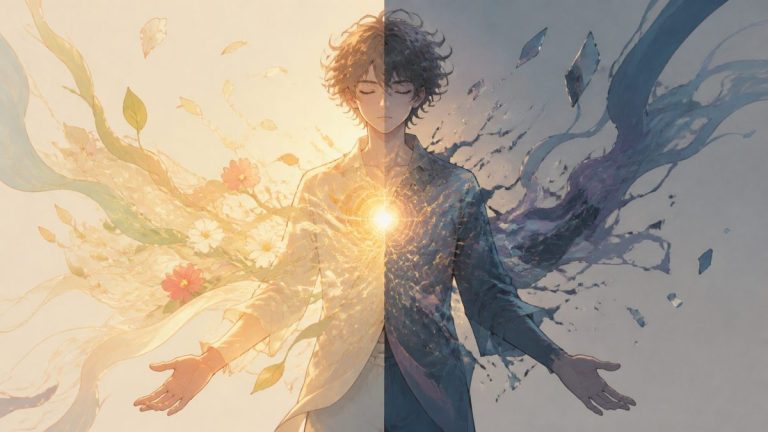
The Ignorant Mirror lacks what we might call “sun knowledge” or self-knowledge. When the light strikes this mirror, it naturally assumes that the light belongs to it – that this consciousness, this sense of “I,” is its own property. When the mirror bends and moves (representing our emotions and thoughts), the reflected light appears to bend and move as well. From this perspective, the “I” seems to be constantly moving, changing, and affected by whatever happens to the mirror.
This is the common human experience: when you walk, the self-evident “I” seems to be moving. When you're emotional, your sense of self seems to be disturbed. Whatever happens to the subtle body appears to affect the consciousness that is striking upon it.
The Wise Mirror understands the true nature of what is happening. It recognizes that while the experience may be one of movement and change, the light itself – consciousness – never actually moves. There is no difference whatsoever between the reflected light and the original, all-pervasive light that is not moving.
The wise mirror cognitively understands that although it seems like the light is moving when the mirror moves, the light itself is actually stationary. This knowledge cancels out the misleading experience.
The Impossibility and Futility of Ego Destruction
A crucial insight emerges from this understanding: you cannot eliminate the ego or Ahamkara. Why? Because Ahamkara arises naturally from the very presence of the subtle body. Since you didn't create the subtle body – it simply exists as a manifestation of consciousness's capacity – you cannot eliminate it.
This reveals the non-validity of teachings that insist you must “destroy your ego” or “destroy your Ahamkara.” It's simply not possible. When consciousness pervades a subtle body, a sense of “I” necessarily arises. There is no question of destroying anything – this is simply how consciousness expresses itself through form.
The Resolution: Knowledge, Not Destruction
The resolution lies not in destruction but in understanding. While you cannot change the fact that you experience yourself as an individual “I,” you can understand the true nature of this experience. You can recognize that:
- The consciousness reflected in your subtle body is not different from the one, all-pervasive consciousness
- Though it appears that your sense of “I” moves and changes, consciousness itself never actually moves
- Your individual identity is real as an experience but not separate from the totality
This understanding doesn't eliminate the experience of being an individual – you continue to function with your unique personality, memories, and characteristics. However, it transforms your relationship to this experience. You no longer mistake the reflection for something separate from the source.
Conclusion: Living as a Wise Mirror
The concept of Ahamkara reveals that individual identity is neither an illusion to be destroyed nor an ultimate reality to be defended. It is consciousness expressing itself through the beautiful diversity of countless subtle bodies, each reflecting the one light in its unique way.
When this understanding dawns, you continue to live as an individual while knowing yourself to be the very consciousness that makes all experience possible. You function as what we might call a “wise mirror” – fully engaged in your individual existence while never forgetting the source of the light you reflect.
This is the profound gift of understanding Ahamkara: not the elimination of the self-concept, but the recognition of what you truly are beyond all concepts – the one consciousness appearing as many, the one existence enjoying itself from countless unique standpoints.
“Based on the teachings of Andre Vas”