
Jealousy: The Insecurity That Binds Us
Understanding the Root of Our Unease
Jealousy is often misunderstood—confused with envy, trivialized as mere possessiveness, or dismissed as a weakness unworthy of serious examination. Yet it remains one of the most powerful emotions that govern human behavior, often quietly directing our choices, corroding our relationships, and limiting our potential. To truly understand jealousy, we must look beneath the surface of what we feel and examine what it reveals about ourselves.
At its core, jealousy is the insecurity about losing something that is near and dear to us. It emerges not from the object or person we fear losing, but from the identity we have constructed around their presence. When we are jealous, we are essentially saying: “My sense of self, my worth, my standing in the world depends on the continued presence of this person or thing.” This is the fundamental insight that transforms jealousy from a mysterious emotion into something we can work with.
Envy and Jealousy: A Critical Distinction
Before proceeding further, it's essential to clarify the difference between envy and jealousy, as these emotions are frequently conflated yet operate in fundamentally different ways. Envy is a two-person dynamic: you see someone who has something you desire—wealth, beauty, talent, status—and you feel lack. You wish you possessed what they have. Envy lives in comparison: “They have what I don't have, and I want it.” It is a longing directed outward, focused on acquiring something external that seems to belong to someone else. When you envy someone's career success, for instance, you are simply wishing you had achieved similar success.
Jealousy, by contrast, is a three-person dynamic and operates quite differently. Jealousy involves the fear of loss—specifically, the loss of something or someone already in your possession or relationship. It arises when you perceive a threat that a third party might take away what you believe belongs to you or defines you. When you feel jealous of your partner talking to an attractive person at a party, you are not wishing you could be that person; you are fearing that the third person might take your partner away from you. Jealousy is rooted in the anxiety of losing your place, your standing, or your person to someone else. While envy asks, “Why don't I have that?” jealousy asks, “Will I lose this to them?” This distinction is critical because it reveals that jealousy is ultimately about insecurity regarding what you already have, not desire for what you lack. Understanding this difference allows us to approach these emotions with far greater clarity and wisdom.
The Architecture of Jealousy
Consider a common scenario: You bring someone you care about to a social gathering. They begin talking animatedly with another person. You notice the connection, the laughter, the ease between them. In that moment, jealousy may arise.
But what actually happened? Objectively, two people enjoyed a conversation. There is no intrinsic malice in that moment—no one deliberately set out to hurt you. Yet your mind constructs an elaborate narrative. Will they prefer this person to me? Am I not enough? Will I lose them? These stories are not reflections of reality; they are projections of your insecurity.
This is the essential nature of jealousy: it involves a third party. Envy lives between two people. Jealousy lives in the tension between three.
The Paradox of Jealousy
Here's the uncomfortable truth: the more you try to possess or control what you fear losing, the tighter you bind yourself. The person who constantly monitors their partner's interactions, who demands exclusive attention, who cannot tolerate even innocent friendships—this person is not protecting themselves. They are building a prison, one restriction at a time.
Moreover, this approach betrays a fundamental misunderstanding. If someone truly values your company because of who you are—your genuine qualities, your character, your presence—then there is nothing to fear from them connecting with others. Conversely, if your hold on someone depends entirely on jealous vigilance and possessiveness, you are not secure in their affection. You are aware that it is conditional, fragile, and dependent on your control.
The Insecurity Beneath
Jealousy reveals something important: it points to a problem that exists not in the external world but within your own sense of self. When you examine jealousy carefully, you discover layers of limiting beliefs:
- I am not good enough.
- My worth depends on being chosen above others.
- If someone leaves me, I am fundamentally deficient.
- I need this person or thing to be complete.
These beliefs are often ancient, installed in childhood or through past painful experiences. They live in our unconscious, quietly directing our emotional responses until we bring them into the light.
The Path Beyond Jealousy
Step One: Acknowledge the Cause-Effect Relationship
The first step in moving beyond jealousy is to recognize that the world operates according to a predictable cause-and-effect relationship, not random cruelty designed to hurt you.
When you bring someone to a social gathering, that is a cause. Their conversation with another person is not a cause targeting you; it is simply what naturally happens when two people connect. There is no evilness here, no deliberate attempt to diminish you. It is simply the nature of human interaction.
This acknowledgment removes the narrative of victimhood. You are not being attacked. You are not the target of a conspiracy. The world is not conspiring against you. This realization is liberating because it places responsibility where it actually belongs—not on external circumstances, but on how you choose to interpret and respond to them.
Step Two: Question Your Identity
If your identity is so fragile that it collapses when someone talks to another person, then your foundation is built on sand. The second practice is to investigate the beliefs underlying your jealousy:
- Why do I feel insecure about this situation?
- What story am I telling myself?
- Is this story true, or am I projecting my fears onto reality?
- What would it mean if this person chose to spend time with someone else?
Often, you will discover that the answer is: It would mean nothing about my worth or my capabilities. It would simply mean they chose to spend time with someone else.
Step Three: Use Jealousy as Information, Not Direction
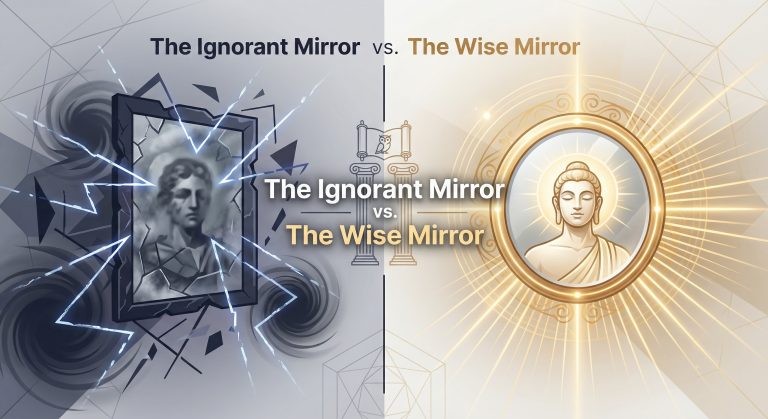
Rather than suppressing jealousy or acting on it destructively, use it as a mirror. Jealousy is an excellent teacher. It illuminates where you feel inadequate, where you have tied your self-worth to external circumstances, and where you have mistakenly believed that someone else is responsible for your completeness.
When jealousy arises, instead of following its impulse toward possessiveness or control, pause and ask: What is this emotion teaching me about myself?
Use jealousy as inspiration for genuine growth. If you notice yourself thinking, “They are better than me in this way,” then take that as motivation to develop yourself. Refine your skills. Cultivate your presence. Deepen your character. This transforms jealousy from a destructive emotion into a catalyst for positive change.
Step Four: Shift From Ownership to Trusteeship
One of the deepest practices is to convert your sense of ownership—“This is mine, and it must remain mine”—into trusteeship—“I have been blessed to be in relationship with this person or thing for a time. My responsibility is to use this blessing wisely.”
This shift fundamentally changes your relationship to what you cherish. When you hold something in trusteeship rather than ownership, you are freed from the desperate need to control it. You can appreciate it fully without the constant background anxiety of losing it. Paradoxically, this often strengthens relationships because people sense your security and freedom, rather than your fear and need.
The Deepest Teaching: The Nature of the “I”
The ultimate resolution of jealousy lies in something more radical than managing emotions or changing behaviors. It involves questioning the very identity that jealousy is designed to protect.
When you examine jealousy carefully, you discover that you are attempting to protect something you call “I”—my reputation, my relationship, my status, my completeness. But what is this “I” that requires such fierce protection? Is it solid? Is it truly yours? Will it journey with you when this body dies?
The spiritual traditions have long held that this sense of individual identity—the “I” that feels threatened, diminished, or incomplete—is not what it appears to be. It is a constructed self, temporary and ever-changing. Your true nature is far more spacious, far more complete, and far less dependent on external validation or possession.
This doesn't mean becoming cold or detached. Rather, it means discovering that your essential nature is already whole. When you rest in this understanding, jealousy loses its grip. You can appreciate the people and things in your life without the desperate need to possess them. You can enjoy genuine connection without the underlying anxiety of loss.
Living With Jealousy
For most of us, complete liberation from jealousy is a distant goal. We still feel its sting. We still construct protective narratives. We still experience moments of insecurity.
The practice is not to eliminate jealousy entirely—it is to develop a different relationship with it. When jealousy arises, meet it with curiosity rather than judgment. Ask what it is teaching you. Use it as information about your conditioning, your beliefs, your fears. And gradually, through this compassionate investigation, you will discover freedom not from jealousy itself, but from the blindness and reactivity that jealousy creates.
In this way, even our most challenging emotions become teachers on the path to wisdom.
“Based on the teachings of Andre Vas”