Pain vs. Suffering: A Vedantic Perspective from the Ashtavakra Gita
Human life inevitably includes pain. Physical injury, illness, loss, disappointment, and emotional upheaval are universal experiences. Yet, according to the wisdom of the Ashtavakra Gita, pain and suffering are not the same. Understanding this distinction is central to inner freedom.
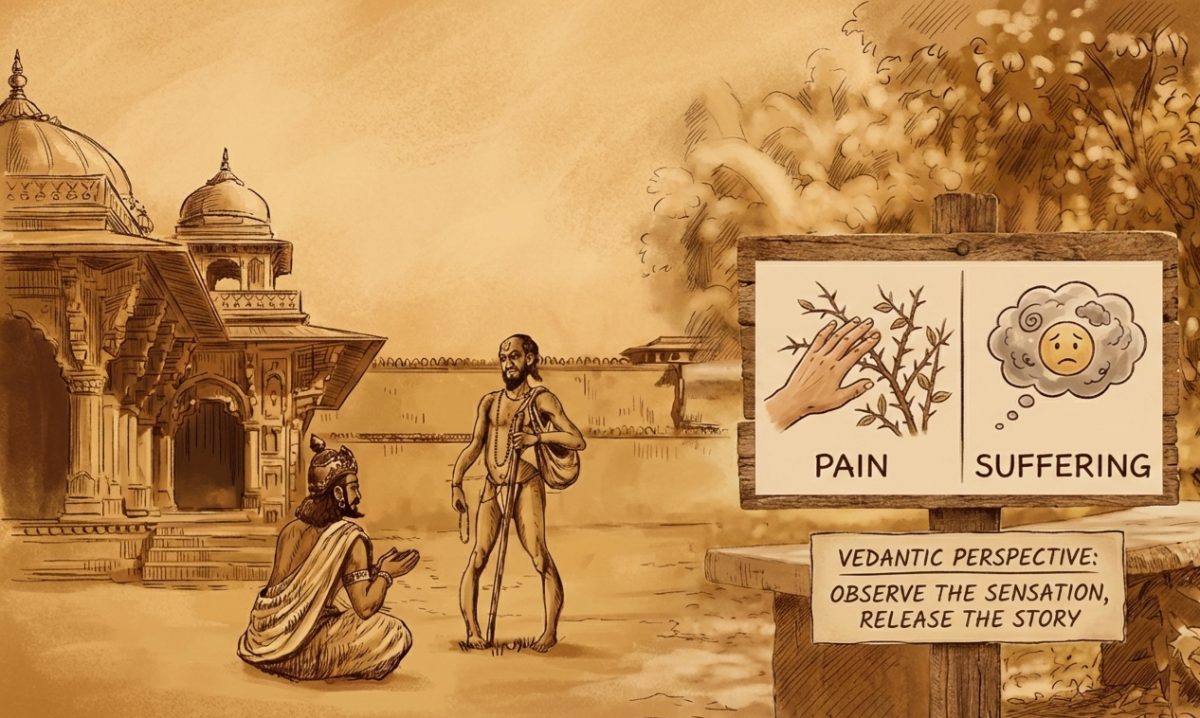
Pain Is a Sensation; Suffering Is a Response
Pain refers to physical or emotional sensations. A broken bone hurts. The loss of a loved one brings grief. Losing a job can trigger sadness or anxiety. These experiences arise naturally in the body and mind.
Suffering, however, is something more. It is the psychological response layered on top of pain. It appears in thoughts such as:
- “Why me?”
- “This shouldn’t have happened.”
- “I can’t handle this.”
- “This has ruined my life.”
Pain is what happens. Suffering is what we add.
The sages of Advaita Vedanta explain that while pain is unavoidable, suffering is optional. The difference lies not in the experience itself, but in how it is understood.
The Teaching of the Ashtavakra Gita
In the Ashtavakra Gita, the sage Ashtavakra teaches King Janaka about the nature of the Self (ātma).
Ashtavakra declares that your true nature is pure consciousness—limitless, all-pervasive, and unaffected by whatever appears within it. Just as space is not harmed by what occurs inside a room, consciousness is not harmed by the experiences that arise in it.
Everything you experience—thoughts, emotions, sensations—appears in consciousness. Even pain is revealed by consciousness. But the consciousness itself remains unchanged.
This is the key insight:
Pain affects the body and mind.
Suffering arises when we believe pain affects who we truly are.
The Rope and the Snake: How Suffering Is Created
A famous metaphor: mistaking a rope for a snake in dim light.
The rope itself is harmless. But if you imagine it to be a snake, fear arises immediately. The fear is real—but it is based on misperception.
Similarly:
- An event occurs (pain).
- The mind projects meaning onto it.
- We conclude: “This threatens me.”
- Fear, resistance, and distress arise (suffering).
The event itself is not the source of suffering. The misinterpretation is.
When we assume that painful experiences threaten our essential being, suffering is born. When we recognize that our true nature as consciousness cannot be harmed, suffering dissolves—even though pain may remain.
The Enlightened Perspective
According to Ashtavakra, an enlightened person still experiences pain. Their body can be injured. Their mind can register sadness. But they no longer identify themselves as the body-mind.
They understand:
- Pain is a passing experience.
- It arises in consciousness.
- It cannot alter consciousness.
- Therefore, it cannot truly threaten them.
Like the sun shining on a battlefield or a beautiful garden without being affected by either, consciousness reveals pleasant and unpleasant experiences without being changed by them.
Because of this clarity, the enlightened person remains inwardly free from suffering.
Bondage and Freedom Depend on Perspective
Ashtavakra states:
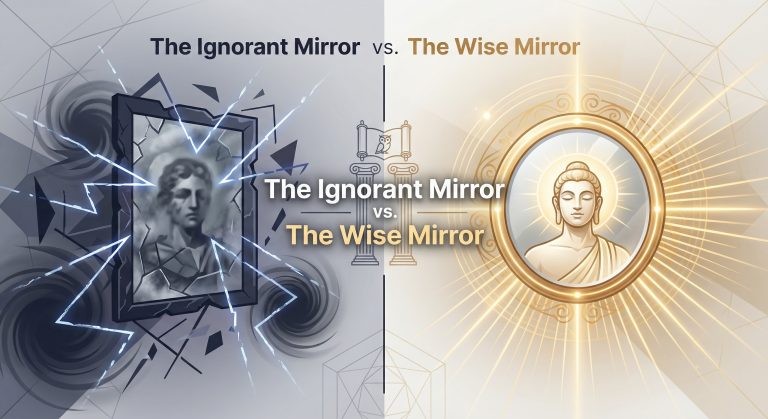
If you identify with the body and mind—both of which are vulnerable—you feel bound, fragile, and constantly threatened.
If you identify with pure consciousness—limitless and untouched—you recognize your innate freedom.
The difference between bondage and liberation lies in identification.
The difference between suffering and peace lies in understanding.
A Modern Parallel: Cognitive-Behavioral Therapy
This ancient teaching aligns with principles of modern psychology, especially cognitive-behavioral therapy (CBT).
CBT teaches that emotional suffering is often caused by distorted interpretations:
- “I lost my job; therefore I am worthless.”
- “This relationship ended; therefore I am unlovable.”
- “This pain means my life is ruined.”
When misinterpretations are corrected, suffering reduces.
Vedanta goes deeper. It questions the most fundamental misinterpretation of all:
“I am this limited, vulnerable body-mind.”
When this assumption is corrected, a profound shift occurs. Pain may still arise, but the sense of existential threat disappears.
The Radical Freedom Available Now
The distinction between pain and suffering is not philosophical theory—it is transformative insight.
- Pain is part of human life.
- Suffering arises from ignorance of our true nature.
- Knowledge of the Self burns away that ignorance.
- When ignorance is removed, suffering ends.
You are not the fragile experiencer of pain.
You are the awareness in which pain appears.
Recognize that, and suffering falls away.
In Summary
| Pain | Suffering |
| A physical or emotional sensation | A psychological reaction to that sensation |
| Natural and unavoidable | Optional and interpretation-based |
| Happens in the body-mind | Arises from mistaken identification |
| Does not affect consciousness | Ends when true nature is recognized |
When the misunderstanding ends, freedom begins.
Based on the teachings of Swami Tadatmananda