
Your True Nature Is Ātmā – Limitless, Actionless, Ever-Free Consciousness
Vedānta is the teaching of the reality of oneself – “my true nature.” The teaching takes the form of inquiry into the real meaning of the word “I.” That “I” is the Self that remains unchanged from childhood to youth to old age. We learn that this unchanging Self is free from all limitations and suffering.
This truth is not something newly acquired; it is your very being. Yet you experience yourself as limited, incomplete, and subject to sorrow. This is because of ignorance (avidyā) – a fundamental misunderstanding of your own nature that has been deeply entrenched in the psyche from birth.
Self-awareness and free will are unique to human beings. Other creatures are bound by patterns set by instinct. A human also has instincts, but is not bound by them. For example, a cow is bound to eat grass every day. A human being, however, has the freedom to choose a diet appropriate for their body.
Because you are blessed with free will, you cannot rely solely on instinct as a guide for behavior. You must thoughtfully choose your actions. You can use this freedom to consciously prepare your mind in order to discover your true nature.
The Mind Is the Medium
To recognize your true nature, a prepared mind is required. Two points are especially important here:
- You are not preparing the Ātmā. You are preparing your mind-instrument to recognize your true nature. Ātmā is the truth of everything; it is ever the same. It does not undergo any change. That is why a wise teacher can share this vision with anyone.
- This ignorance does not reside in the Ātmā (which is ever pure), but in the mind (antaḥkaraṇa). The mind is the instrument through which you perceive, think, feel, and know. All knowledge – including self-knowledge – takes place in the mind alone.
Therefore, to recognize the ever-present Ātmā, you need a properly prepared instrument.
Why Preparation Is Non-Negotiable
If you try to paint a wall without preparing it, the paint will eventually peel off. The surface may be dirty, rough, or flaky, preventing the paint from adhering properly.
In the same way, when knowledge is given to an unprepared mind, it does not remain. Without readiness, attention, and openness, knowledge cannot take root. Just as a wall must be cleaned and primed before painting, the mind must be prepared before it can truly absorb and retain self-knowledge.
A mind preoccupied with “I, me, mine” – along with its emotional reactions, inner narratives, and unresolved traumas – is not available for subtle inquiry into the Self.
The Mind as It Is Now
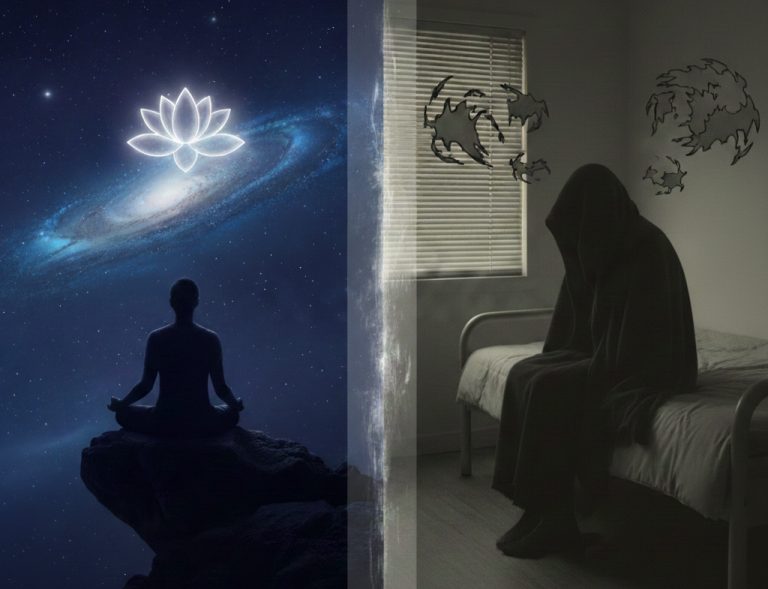
The mind, as it currently is, carries false interpretations and projections. These distortions prevent objectivity and create emotional turbulence – agitation (rajas) and inertia or dullness (tamas). Such disturbances prevent the mind from being calm, deep, receptive, and capable of sustained attention.
A disturbed or impure mind is like a dusty mirror. Even if you stand before it (Ātmā), you will not see a clear reflection. The teacher’s words may be heard, but they will be grasped unclearly or distorted.
As Pujya Swamiji used to say, “For one with an unprepared mind, Vedānta is like calculus to a person who is still learning basic mathematics.”
Concrete Reasons for Preparation
- To Remove Obstacles to Knowledge
A mind preoccupied with personal reactions and self-centered concerns cannot be available for subtle inquiry. - To Assimilate the Teaching – Not Merely Hear It
Vedānta uses words, logic, and metaphors to point beyond the mind. If the mind is absorbed in its own stories, the teaching may appear to be mere philosophy. Preparation enables objectivity and clarity. - To Make Knowledge “Stick”
When received by an unprepared mind, knowledge remains as information rather than transformative understanding. - For the Fruition of Knowledge – Peace and Freedom
The ultimate goal is freedom while living. A pure, quiet, and steady mind is more capable of assimilating self-knowledge. Preparation matures the mind so it can hold the expansive vision of oneness without slipping back into old patterns of agitation.
In essence: You are not preparing the Ātmā. You are preparing the mind-instrument to recognize that you are already That.
“Based on the teachings of Dr. Tina Rampadarath”