Beyond the Trigger: The Truth About Anger and How to Manage It
The Origin of Anger
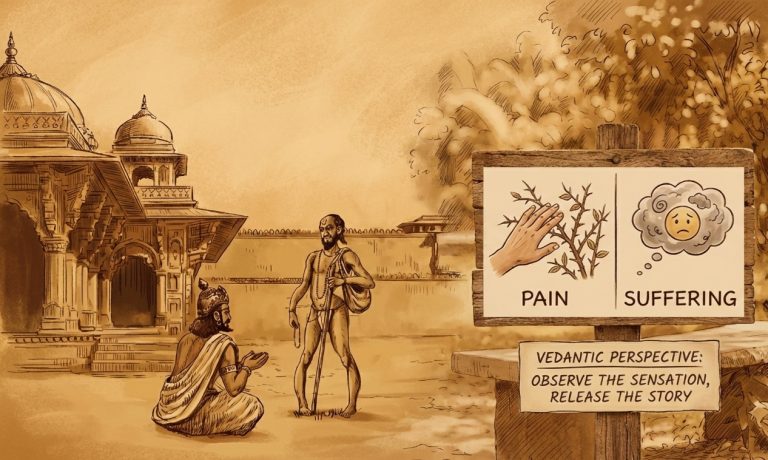
Anger is rooted in pain stored in the unconscious mind during childhood. This pain stems from unfulfilled desires — moments when something we deeply wanted did not happen, leaving behind an emotional wound. Over time, as we grow, this stored pain begins to surface and express itself through anger, hatred, and other reactive emotions, gradually taking control of the individual.
This inner pain most commonly surfaces when triggered by someone close to us — a mother, husband, child, or colleague. The proximity of these relationships makes them the most frequent catalysts for our deeper emotional responses.
How Anger is Born: The Obstruction Between Desire and Reality
As adults, we carry expectations into our daily lives. We want our loved ones to behave in certain ways; we want life to unfold on our own terms. However, when something stands between what we desire and what actually happens, anger emerges.
Think of it this way: between the desirer and the desired lies an obstruction — something that blocks the fulfillment of an expectation. This obstruction deflects the desire, and that deflected desire is what we experience as anger.
In essence, anger is nothing more than an expression of pain and unfulfilled expectation.
It is important to understand that no external person or situation actually causes your anger. Nobody has that capacity. The other person merely presses a button that already exists within you. The external world may serve as a trigger, but the anger itself is entirely your own — born from your own pain.
When Desires Are Deflected: Common Examples
Desire Toward Others in General
- Expectation: A colleague delivers an assignment by the agreed deadline
- What goes wrong: They deliberately take a day off, causing you to miss the deadline
Desire for Affection and Understanding
- Expectation: After an exhausting day, you ask your husband to pick up the children
- What goes wrong: He is caught up with work, and you find yourself managing alone
Attachment Toward a Child
- Expectation: You expect gratitude, understanding, and acknowledgment from your child, knowing you are doing your best for them
- What goes wrong: Instead of love and appreciation, you are met with hurtful behavior
Emotional Dependence: A Deeper Layer
Emotional dependence occurs when our desires become so heavily directed toward others that we rely on them to regulate our sense of wellbeing. We expect a husband to react in a certain way, a son to understand us, grandchildren to behave as we wish. When these people fail to meet our expectations, the pain of that unfulfilled need translates directly into anger.
Signs of emotional dependence include:
- Intense fear of being alone; a constant need for company
- Seeking ongoing validation or approval from a husband, child, colleague, or partner
- Compromising personal values or boundaries simply to maintain peace
- Inability to make decisions independently, relying on others to choose for you
- Allowing another person's mood or behavior to dictate your own emotional state — “My husband shouted at me, my boss disapproved, my child was rude — and now my entire day is ruined”
- Believing that acquiring things — a house, a car — will bring happiness
- Feeling as though life is impossible without a specific person
The danger of emotional dependence lies in this: we overestimate the role others play in our lives and, in doing so, deeply underestimate our own sufficiency and inner capability.
Self-Obstruction: When We Become Our Own Enemy
Not all anger is directed outward. Sometimes, we are our own obstruction. We carry within us an ideal self — an image of who we wish to be — and an actual self — who we truly are in the present moment. When the gap between these two feels too wide, we turn our anger inward.
Even here, the root remains the same: anger is an expression of expectation — only this time, the expectation is directed at ourselves.
What Happens When Anger Takes Hold
Once anger arises, the capacity for sound judgment disappears almost immediately. In a state of anger, the distinction between what is appropriate and what is not simply ceases to exist. Actions and words begin to happen on their own — not through conscious choice, but through raw impulse.
The Cascade of Anger
Anger leads to delusion. Delusion functions like a mental blackout, erasing access to whatever wisdom, learning, or insight you may have accumulated — whether through study, therapy, spiritual practice, or lived experience. In that moment, none of it is available to you.
Delusion leads to loss of memory. The intellect loses its ability to assess right from wrong, to pause and reflect, to say stop or go forward with any real awareness. Cognitive functioning narrows sharply. Dangers appear smaller than they are. Actions feel less consequential than they truly are. The weight of consequences barely registers.
In the absence of wisdom, impulse takes over entirely. A person seized by rage may bite, kick, scream, strike out, or unleash the most cutting and humiliating words imaginable — words designed not to express pain, but to shame and destroy. And in that state, whatever happens, simply happens. Until anger arrives, a person may exercise great care. The moment anger takes over, all caution is abandoned.
The Distortion of Perception
Anger also distorts how we perceive others. Those in the grip of rage are far more likely to commit what psychologists call correspondence bias — attributing another person's behavior entirely to their character, while ignoring circumstances altogether.
Notice the language that emerges:
“You always insult me. You never understand me.”
Words like always and never are the language of absolute judgment, not honest communication. A person in pain might say, “I feel hurt by those words.” But a person in anger says, “What kind of family raised you? What did your parents ever teach you?” — launching a full assault not just on the act, but on the person's entire identity.
Why Anger Is Unlike Other Difficult Emotions
Sadness and fear, difficult as they are, tend to encourage analytical thinking — they slow us down and prompt reflection. Anger does the opposite. It accelerates, narrows, and blinds.
This is why mastery over anger is only possible before it fully takes hold. Once it has risen completely, what follows is simply history — a record of what the unguarded mind is capable of doing.
Understanding the Real Problem
The true problem is not anger itself — it is the absence of obstructions in our expectations. We plan, we hope, we desire, and we build entire emotional worlds around how things should unfold. But we leave no room for the inevitable reality that things will not always go as planned.
Obstructions are not exceptional. They are woven into the very fabric of life. Even something as automatic as breathing has its obstructions. Yet when they appear in our relationships and daily circumstances, we find them intolerable — and that intolerance becomes anger.
Consider this honestly:
- Your husband carries his own inner wounds and limitations
- Your children may be silently carrying expectations of their own
- No situation, and no person, is ever fully within your control
Ultimately, it all comes back to you — specifically, to the intensity with which you desire something. The magnitude of your anger is not determined by the person or situation in front of you. It is determined entirely by how tightly you are holding onto what you want.
If a desire matters very little to you, its non-fulfillment will produce very little anger. But if the desire borders on emotional dependence, the anger that follows its non-fulfillment will be neither small nor easy to manage — not for you, and not for anyone caught between you and what you want.
The equation is equally clear from the other side: where there is no expectation, there is no anger. If you already know that someone may not come through for you, you are not blindsided when they don't. But the moment you expect it, their failure to deliver becomes a wound.
This does not mean becoming passive or giving up. It means being objective — seeing clearly, taking reasonable precautions, doing what needs to be done, and then releasing the outcome. Pray for grace, do your best, and leave the rest.
Anger Is Not the Enemy
Before moving toward solutions, something important must be stated clearly:
Anger is a legitimate emotion. There is nothing wrong with feeling angry. There is nothing wrong with feeling hatred or jealousy. These are human experiences, and they deserve to be acknowledged without shame.
What is not acceptable is using those emotions to victimize others — or yourself. Legitimate anger does not grant permission to wound, humiliate, or destroy. It is a signal, not a weapon.
The goal, therefore, is not to suppress anger or pretend it doesn't exist. The goal is to develop the tools and the inner discipline to process it intelligently — to let it move through you without letting it move you to harm.
The Real Solution: Work Before the Storm
The secret to mastering anger does not lie in managing it after it erupts. By then, as we have already seen, the damage is often done. The real work happens before anger takes hold.
Include Obstructions in Your Expectations
To live without desires or expectations is neither realistic nor meaningful. But wrong expectations — those that carry no room for error, delay, or disappointment — lead inevitably to deception and anger.
The shift is this: expect, but expect intelligently. Let your expectations include the honest acknowledgment that things can and do go wrong. This is not pessimism. It is not a wish for failure. It is one of the most grounding and liberating truths available to us.
When you hold this awareness, a missed deadline, a partner's unavailability, or a child's ingratitude does not shatter your world — because you already knew that world was not guaranteed. You take it in stride. You adjust. And the anger that would have consumed you simply does not find its footing.
From Wanting to Preferring
Perhaps the most practical and powerful shift available to us is the movement from desire to preference.
- I want my husband to listen to me becomes I would prefer that my husband listens to me
- I need my child to understand me becomes I would prefer that my child understands me
- My mother must behave differently becomes I would prefer that my mother behaves differently
This is not a small change in wording. It is a profound change in your relationship to the outcome. A preference leaves room for reality. A want, especially one soaked in emotional dependence, leaves no room at all.
When we reduce our desires and emotional dependencies to preferences, we also stop overvaluing the people, situations, and objects in our lives. We bring our subjectivity down to a level where it no longer rules us. We begin to see others — and ourselves — more clearly and more fairly.
Expressing Anger Wisely
Even with the best preparation and the deepest self-awareness, anger will still arise. When it does, it must be expressed — not swallowed, not suppressed, not directed at others as a weapon. Unexpressed anger does not dissolve; it accumulates, simmers, and eventually erupts in ways far more destructive than the original feeling.
It takes genuine courage and grace to acknowledge anger and choose to work with it consciously. That in itself is worth honoring. These are some ways to do exactly that:
- Go outside and let it out. Stand in an open space and scream. Say everything you feel you cannot say. Let the sky hold it.
- Use physical release safely. Place a wet towel on the floor and beat it. The body needs to discharge what the mind is holding.
- Punch a pillow or use a punching bag. Physical movement breaks the freeze that anger creates inside the body.
- Write it all out. Use whatever language feels true — the words you would never say aloud. Hold nothing back on paper. Do not show it to anyone, and destroy it when you are done.
- Buy yourself time. Tell the person directly: “I am angry right now. I will speak with you when I am ready.” This is not avoidance — it is wisdom.
- Create a culture of accountability at home. Let your family know that in your home, no one will be victimized by anger. Agree together to name it when you see it — “You seem angry right now.” This shared awareness softens the mechanical, reactive quality of the mind and gradually builds a safer emotional environment for everyone.
- Address situations and people directly and with objectivity. If someone is being unreasonable, it is fair to say so clearly and calmly. Draw boundaries — for yourself and for others — not out of punishment, but out of genuine self-respect and care.
Anger does not have to be a force that controls you. With awareness, honest self-examination, and the right tools, it can become something you understand, something you express appropriately, and ultimately something that leads you — not away from your relationships and your life — but more deeply and honestly into them.
Based on the teachings of Dr. Tina Rampadarath